
 By Isoldevoss
 Introduction to Photonic Innovation in Aesthetic Dentistry
Modern aesthetic dentistry continues to evolve through the integration of advanced scientific principles and sophisticated treatment technologies. Among the most influential developments in cosmetic dental care are light-activated whitening systems that enhance the effectiveness of traditional brightening methods. These photonic technologies utilize controlled wavelengths of light to accelerate whitening reactions, contributing to improved shade enhancement and visual clarity. Teeth Whitening in Riyadh increasingly reflects the adoption of these innovative systems, highlighting how technology-driven solutions can support refined aesthetic outcomes while maintaining enamel integrity.
The growing interest in technologically enhanced whitening procedures reflects a broader shift toward precision-based dentistry. Rather than relying solely on conventional chemical agents, modern approaches integrate light activation to improve efficiency and consistency. The interaction between light energy and whitening compounds demonstrates how scientific research continues to influence the evolution of dental aesthetics.
Scientific Principles Behind Light-Activated Whitening Technology
Light-activated whitening systems in Teeth Whitening in Riyadh are based on photochemical reactions that enhance the activity of whitening agents applied to the tooth surface. Whitening formulations often contain peroxide-based compounds that release oxygen molecules when activated. These oxygen molecules interact with stain particles embedded within enamel and dentin, breaking them down into smaller, less visible components.
The introduction of light energy supports the acceleration of this reaction process by increasing molecular activity within the whitening compound. Specific wavelengths are selected to optimize the activation process while maintaining controlled thermal conditions. Scientific understanding of photonic interaction allows clinicians to utilize targeted illumination that enhances whitening efficiency without compromising structural stability of dental tissues.
Role of LED and Laser Technologies in Modern Whitening Systems
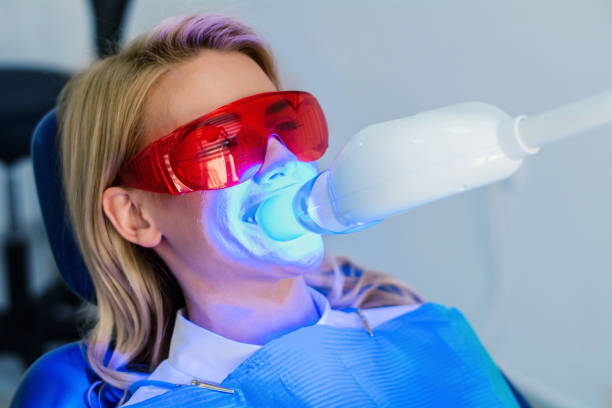
Advancements in photonic engineering have enabled the development of LED and laser-based whitening systems designed to deliver precise wavelengths of light. These technologies provide consistent illumination across the tooth surface, supporting uniform whitening outcomes. LED-based systems are often calibrated to produce blue-spectrum light, which interacts effectively with whitening gels designed to respond to specific energy levels.
Laser-assisted whitening systems offer highly focused energy delivery, allowing clinicians to achieve controlled activation of whitening compounds. The ability to regulate intensity and exposure time contributes to improved consistency in shade enhancement. These technological innovations demonstrate how optical engineering continues to influence the refinement of aesthetic dental procedures.
Optical Properties of Enamel and Light Reflection
Understanding the optical characteristics of dental enamel is essential to appreciating the effectiveness of light-activated whitening systems. Enamel is naturally semi-translucent, allowing light to penetrate and reflect in complex ways that influence perceived tooth color. When stain particles accumulate within enamel microstructures, light reflection patterns may change, contributing to darker or uneven appearance.
Light-activated whitening systems support improved optical clarity by assisting in the breakdown of stain molecules that interfere with natural light transmission. As stain particles become less concentrated, the reflective properties of enamel improve, contributing to enhanced brightness and uniform shade distribution. This interaction between photonic technology and enamel structure illustrates the scientific foundation of modern whitening innovations.
Precision-Controlled Energy Delivery in Whitening Procedures
One of the defining characteristics of advanced light-activated systems is the ability to control energy intensity and exposure duration. Precision control ensures that whitening compounds are activated effectively while maintaining balanced temperature conditions. Excessive heat generation may influence tooth sensitivity, making controlled energy delivery an essential component of modern whitening technology.
Digital calibration systems allow clinicians to adjust light intensity according to specific treatment requirements. This level of customization supports consistent whitening outcomes while prioritizing patient comfort. Controlled photonic activation therefore contributes to the balance between aesthetic effectiveness and structural preservation within dental tissues.
Integration of Digital Dentistry in Whitening Treatment Planning
Digital dentistry has significantly influenced the planning and evaluation of aesthetic procedures. High-resolution imaging systems allow clinicians to assess tooth shade variations prior to treatment. Digital shade mapping technologies enable precise comparison of color changes achieved through whitening procedures.
These digital evaluation tools contribute to improved communication between clinicians and patients, allowing realistic expectations to be established. By analyzing optical characteristics of enamel surfaces, clinicians can determine appropriate light exposure parameters that align with aesthetic objectives. Teeth Whitening in Riyadh increasingly incorporates such digital innovations, demonstrating the integration of advanced diagnostic tools within modern cosmetic dentistry.
Safety Considerations in Light-Activated Whitening Systems
Safety remains a fundamental consideration in the application of photonic technologies within dental care. Modern whitening systems are designed to operate within controlled wavelength ranges that minimize risk to enamel and surrounding oral tissues. Protective measures are implemented to shield gums and soft tissues from excessive light exposure.
Clinical research continues to evaluate the interaction between light energy and dental structures to ensure that whitening procedures remain aligned with principles of minimally invasive care. Controlled photonic activation allows clinicians to achieve effective shade enhancement while maintaining structural integrity of enamel. The emphasis on safety reflects the responsible integration of advanced technology within aesthetic dentistry.
Enhancing Consistency in Aesthetic Outcomes
Consistency in whitening results is influenced by multiple factors, including enamel composition, stain concentration, and treatment protocol. Light-activated systems contribute to improved uniformity by supporting even distribution of photonic energy across the tooth surface. This balanced activation helps ensure that whitening compounds interact consistently with stain particles.
The predictability associated with photonic activation allows clinicians to achieve controlled shade transitions that align with aesthetic preferences. Improved consistency contributes to natural-looking results that complement individual facial characteristics. Technological refinement therefore plays an important role in achieving balanced smile aesthetics.
Technological Innovation and Patient Experience
The incorporation of advanced technologies within dental environments contributes to enhanced patient experience by supporting efficient treatment processes. Digital monitoring systems allow clinicians to evaluate whitening progression during the procedure, enabling adjustments that align with desired outcomes. Reduced treatment variability contributes to improved confidence in aesthetic results.
Technological innovation also supports improved comfort through controlled exposure parameters. By minimizing excessive heat and optimizing energy delivery, modern light-activated systems contribute to balanced procedural experiences. These advancements demonstrate how innovation can enhance both effectiveness and comfort within cosmetic dental care.
Future Developments in Photonic Whitening Technologies
Ongoing research in optical engineering and biomaterials science continues to influence the future of light-activated whitening systems. Emerging photonic technologies may allow further refinement of wavelength precision, enabling even more targeted activation of whitening compounds. Advances in nanotechnology may contribute to improved interaction between whitening agents and enamel microstructures.
Digital simulation tools may allow clinicians to visualize projected shade outcomes prior to treatment, supporting improved planning accuracy. Continued exploration of biomimetic materials may contribute to whitening formulations that interact more harmoniously with enamel composition. The evolution of photonic technology reflects the dynamic nature of modern aesthetic dentistry.
Conclusion
Advanced light-activated systems represent a significant milestone in the progression of cosmetic dental science. By combining photochemical principles with precision-engineered illumination technologies, clinicians are able to enhance the effectiveness of whitening procedures while maintaining enamel preservation. Teeth Whitening in Riyadh increasingly incorporates these innovative solutions, illustrating the growing importance of technological integration within modern smile enhancement strategies.
The intersection of optical science and dental research continues to shape the future of aesthetic dentistry, supporting improved consistency, safety, and personalization. As photonic technologies evolve, light-activated whitening systems are expected to remain central to the pursuit of refined, natural-looking brightness. Through continued innovation and scientific exploration, aesthetic dentistry continues to provide sophisticated solutions that align with both functional health and visual harmony.