
 By imathewjaxson
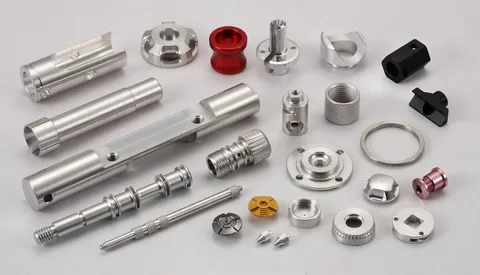
 In modern engineering, achieving accuracy, efficiency, and repeatability is essential for producing high-performance products. As industries evolve, the demand for complex geometries and highly specialized parts continues to increase. This is where precision CNC machined components play a critical role in transforming digital designs into physical reality with exceptional accuracy.
Computer Numerical Control (CNC) machining allows engineers to manufacture intricate parts that would be extremely difficult or impossible to create using traditional methods. From aerospace systems to medical devices, precision machining ensures that every component meets strict performance and safety standards. In complex engineering designs, even the smallest deviation can affect functionality, making CNC precision a fundamental requirement.
Role of Precision CNC Machined Components in Complex Engineering Designs
Complex engineering designs require components that can perform under strict mechanical and environmental conditions. Precision CNC machined components ensure that these requirements are met by offering tight tolerances and consistent quality across production runs.
By using computer-controlled systems, manufacturers can translate advanced CAD models into exact physical parts. This minimizes human error and allows for high repeatability, even in large-scale production.
Key Points:
- Enables production of highly detailed and intricate geometries
- Reduces human error through automation and digital control
- Ensures consistency in mass production of complex parts
- Supports advanced engineering designs with tight tolerances
- Improves reliability in critical applications
The ability to maintain accuracy in every cut, drill, and finish makes CNC machining indispensable for modern engineering. It bridges the gap between conceptual design and real-world functionality, ensuring that even the most complex ideas can be brought to life efficiently.
Manufacturing Accuracy and Tight Tolerances
One of the most important advantages of precision CNC machined components is their ability to achieve extremely tight tolerances. In engineering, even a fraction of a millimeter can determine whether a component functions correctly or fails under pressure.
CNC machines operate with computer-guided precision, ensuring that every movement of the cutting tool is controlled with high accuracy. This level of control is crucial for industries such as aerospace, automotive, and robotics.
Key Points:
- Achieves micrometer-level accuracy in machining processes
- Reduces the risk of part failure due to dimensional errors
- Enhances performance of mechanical assemblies
- Ensures interchangeability of components in production
- Supports high-stress engineering applications
With such precision, manufacturers can confidently produce parts that meet strict engineering specifications. This not only improves product reliability but also reduces waste and rework costs significantly.
Material Versatility in Precision CNC Machining
Another major benefit of precision CNC machined components is their compatibility with a wide range of materials. Engineers can choose from metals, plastics, and composites depending on the requirements of the application.
This flexibility allows manufacturers to optimize strength, weight, durability, and cost for different engineering challenges. CNC machining adapts easily to both soft and hard materials without compromising accuracy.
Key Points:
- Supports metals like aluminum, stainless steel, and titanium
- Compatible with engineering plastics and composites
- Allows customization based on strength and weight requirements
- Maintains precision across different material types
- Suitable for both prototyping and full-scale production
This material versatility makes CNC machining ideal for industries that require specialized components. Whether it is lightweight aerospace parts or durable automotive components, precision machining ensures optimal performance.
Applications of Precision CNC Machined Components in Industry
The use of precision CNC machined components spans across multiple industries where accuracy and reliability are essential. These components are integral to systems that require high performance under demanding conditions.
From medical implants to industrial machinery, CNC machining supports a wide range of applications. Each industry benefits from the ability to produce complex parts with consistent precision.
Key Points:
- Aerospace industry for structural and engine components
- Automotive industry for engine and transmission parts
- Medical industry for surgical tools and implants
- Electronics industry for compact and precise housings
- Industrial machinery for heavy-duty mechanical systems
The widespread adoption of CNC machining highlights its importance in modern manufacturing. It enables industries to innovate while maintaining strict quality and safety standards.
Future Trends in Precision CNC Machining Technology
The future of precision CNC machined components is closely tied to advancements in automation, artificial intelligence, and smart manufacturing systems. These technologies are making machining processes faster, smarter, and more efficient.
As Industry 4.0 continues to evolve, CNC machines are becoming more connected and data-driven. This allows manufacturers to monitor production in real time and optimize performance automatically.
Key Points:
- Integration of AI for predictive maintenance and optimization
- Increased use of automation and robotics in machining
- Enhanced digital twin technology for simulation and testing
- Greater efficiency through smart manufacturing systems
- Improved sustainability through reduced material waste
These innovations will further enhance the capabilities of CNC machining, making it even more essential for future engineering challenges. The combination of precision and technology ensures continuous improvement in manufacturing quality.
Conclusion
In today’s advanced engineering landscape, precision CNC machined components are essential for producing reliable, accurate, and high-performance parts. Their ability to handle complex designs, maintain tight tolerances, and support a wide range of materials makes them indispensable across multiple industries.
From aerospace to medical technology, CNC machining ensures that every component meets exact specifications, contributing to safer and more efficient systems. As technology continues to evolve, CNC machining will play an even greater role in shaping the future of manufacturing.
Ultimately, precision CNC machining is not just a manufacturing process—it is a foundation for innovation in complex engineering designs, enabling industries to turn the most ambitious ideas into reality.