
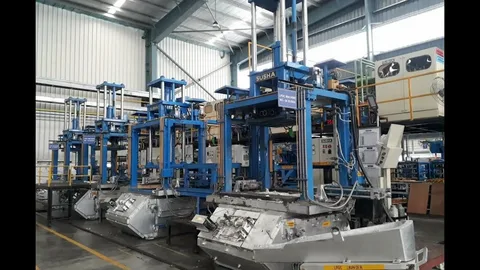
 By imathewjaxson
 High pressure die casting service is one of the most advanced manufacturing techniques used to produce highly detailed, durable, and dimensionally accurate metal components. It is especially valuable for industries that require complex geometries that cannot be achieved through traditional casting or machining methods.
This process uses high pressure to force molten metal into precision-engineered molds, enabling mass production of intricate parts with excellent surface finish and tight tolerances.
Understanding High Pressure Die Casting Service for Complex Shapes
High pressure die casting service is designed to manufacture components with complex shapes, thin walls, and high structural integrity. It is widely used in automotive, aerospace, electronics, and industrial machinery sectors where precision is critical. The process ensures that even the most detailed designs are accurately reproduced.
By injecting molten metal into a steel mold under extreme pressure, manufacturers can achieve consistent quality and repeatability. This makes it ideal for large-scale production runs of complex parts.
Key features include:
- High precision in complex geometries
- Ability to produce thin-walled components
- Excellent surface finish without secondary machining
- Fast production cycle for mass manufacturing
- High repeatability and consistency
Advantages of High Pressure Die Casting Service
The high pressure die casting service offers multiple advantages that make it a preferred choice for modern manufacturing. One of the most important benefits is its ability to produce highly complex shapes with minimal material waste. This improves efficiency and reduces overall production costs.
Another major advantage is the strength and durability of the finished products. Components produced through this method are highly resistant to wear and mechanical stress, making them suitable for demanding applications.
Key advantages include:
- Cost-effective mass production capability
- Superior dimensional accuracy and consistency
- Reduced machining and finishing requirements
- High strength-to-weight ratio in finished parts
- Excellent thermal and electrical conductivity in metal parts
- Faster production cycles compared to traditional casting
Applications of High Pressure Die Casting Service in Industry
High pressure die casting service is widely used across various industries due to its versatility and efficiency. In the automotive sector, it is commonly used for manufacturing engine blocks, transmission cases, and structural components that require high precision.
In addition to automotive applications, it is also used in electronics for producing housings, heat sinks, and connectors. Industrial machinery and aerospace industries also rely on this process for creating durable and lightweight components.
Common applications include:
- Automotive engine and transmission components
- Aerospace structural parts and housings
- Electronic device enclosures and heat sinks
- Industrial machine components and brackets
- Household appliance metal parts
- Communication equipment components
Manufacturing Process of High Pressure Die Casting Service
The high pressure die casting service process involves several well-defined steps to ensure accuracy and quality. It begins with the preparation of a steel mold, also known as a die, which is designed according to the required shape of the component.
Once the mold is ready, molten metal (such as aluminum, magnesium, or zinc) is injected into it under extremely high pressure. After cooling and solidification, the part is ejected and may undergo minor finishing operations.
Process steps include:
- Mold design and preparation
- Melting of selected metal alloy
- Injection of molten metal under high pressure
- Cooling and solidification inside the mold
- Ejection of the final component
- Trimming and surface finishing if required
Quality Control in High Pressure Die Casting Service
Quality control is a critical aspect of any high pressure die casting service, ensuring that each component meets strict industrial standards. Manufacturers use advanced inspection techniques to detect defects such as porosity, shrinkage, or dimensional inaccuracies.
Modern quality systems also incorporate automated inspection tools and real-time monitoring to maintain consistency across large production batches. This ensures reliability and performance in final applications.
Quality control measures include:
- Dimensional inspection using precision tools
- X-ray and ultrasonic testing for internal defects
- Surface finish evaluation and correction
- Pressure testing for structural integrity
- Real-time process monitoring systems
- Statistical quality control methods
Conclusion
High pressure die casting service plays a vital role in modern manufacturing, especially for producing complex-shaped components with high precision and durability. Its ability to deliver consistent quality, cost efficiency, and rapid production makes it an essential solution for industries such as automotive, aerospace, electronics, and industrial engineering.
As demand for lightweight, high-performance components continues to grow, high pressure die casting service will remain a key technology driving innovation and large-scale production efficiency across global industries.