
 By NailaSEO31
 Introduction
Finding the right ring shouldn't feel like a gamble. You want something that catches the eye without falling apart after a few wears, and that's exactly the gap statement rings are built to fill. Whether you're the type who likes bold color, sparkle, or a design that starts a conversation the second someone spots it on your hand, a good statement ring does more than accessorize — it says something about you before you even open your mouth.
This guide walks through what makes these rings worth buying, what to look for, and how to pick one that actually suits your style and your budget.
What Makes a Statement Ring Different from a Regular Ring
A regular ring blends in. A statement ring refuses to. That's the whole point — it's designed to be the first thing someone notices, not an afterthought tucked between other jewelry. The scale tends to be bigger, the color bolder, and the craftsmanship more detailed, since there's nowhere to hide on a piece this visible.
People often ask if statement rings are "too much" for everyday wear, and honestly, that depends entirely on personal taste and where you're headed that day. What separates a great one from a gimmicky one usually comes down to materials and construction.
Cheap statement rings tend to use plated metals that flake or tarnish within weeks. Better ones lean on sterling silver, stainless steel, or gold-filled bases that hold their finish far longer. A ring with a Swarovski crystal centerpiece, for instance, can look genuinely luxurious if it's set properly on a solid band rather than glued onto a hollow shell.
Materials That Actually Hold Up
This is where a lot of buyers get burned, so it's worth slowing down here. Sterling silver is a classic choice because it's durable, hypoallergenic for most people, and takes polish well over the years. Stainless steel has become increasingly popular too, since it resists scratching, doesn't tarnish easily, and works well for anyone with sensitive skin who's had bad experiences with cheaper alloys in the past.
Copper is another material worth knowing about. It has a warm, earthy tone that pairs beautifully with turquoise or lapis lazuli stones, and some people even wear it for the reputed skin benefits, though that's more folklore than science at this point.
Gold-filled pieces sit in between silver and solid gold — you get a real layer of gold bonded to a base metal, which means the color lasts far longer than gold plating without the price tag of solid gold. When you're comparing rings online, always check the listing for the specific metal used. A description that just says "silver-tone" without naming an actual material is usually a red flag for something that won't age well.
Design Styles Worth Considering
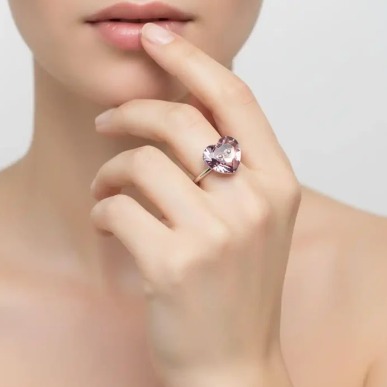
Statement rings come in a surprising range of looks, and picking one really comes down to what kind of impression you're going for. Crystal heart rings, for example, lean romantic and sparkly — great for someone who wants a piece that feels personal, almost like a small love note you wear on your finger.
Hammered rings, on the other hand, have a more textured, handmade look, where the metal itself carries visible dents and waves from being shaped by hand rather than machine-pressed into a flat, uniform band. Wire-wrapped designs are another category entirely. These involve metal wire coiled and shaped around a central stone or crystal, giving the ring an organic, almost sculptural quality.
No two wire-wrapped rings look exactly alike, which appeals to people who don't want to see the same ring on someone else's hand at a party. If you gravitate toward something with a gemstone like amethyst or lapis lazuli, look closely at how the stone is secured — prong settings and wire wraps tend to hold gems more securely than glue-based settings, which can loosen over time.
Why Handcrafted Pieces Are Worth the Extra Look
Mass-produced jewelry has its place, sure, but there's something different about a ring that's actually been shaped by a person rather than stamped out in a factory line of thousands. Handcrafted rings often show small variations — a slightly different curve here, a unique hammer mark there — that machine-made pieces simply can't replicate. That's not a flaw; it's the whole appeal.
You're not buying a copy of a copy. You're buying something closer to a small original. Independent designers who handcraft their pieces also tend to have more flexibility with materials and stone choices, since they're not locked into mass manufacturing contracts.
This is where a brand like Alexa Martha Designs stands out — the rings are handcrafted individually rather than mass-produced, which means the details (hammered textures, wire wrapping, stone placement) get actual attention rather than being rushed through an assembly process. That kind of craftsmanship is harder to find at the price points where affordable jewelry usually lives.
Finding Affordable Options Without Sacrificing Quality
"Affordable" and "cheap" get used interchangeably, but they're not the same thing. Cheap usually means corners were cut somewhere — thinner metal, glued stones, coatings that wear off in a month. Affordable, done right, means the price is reasonable because the business model supports it, not because the materials are poor. Independent jewelry makers often manage this by selling directly to customers, skipping the markup that comes from big retail middlemen.
When shopping for a statement ring on a budget, look for pieces priced in the $35–$90 range that still use real sterling silver, stainless steel, or gold-filled metal rather than plated alternatives. A ring size chart is also worth checking before you buy, since sizing varies more with chunkier statement designs than with thin bands — a ring that fits snug on a slim band might feel completely different once there's a large crystal or hammered texture added to the design.
Caring for Your Ring So It Lasts
Even well-made rings need a bit of upkeep. Sterling silver can develop a light tarnish over time from exposure to air and moisture, but a soft polishing cloth usually brings the shine right back. Stainless steel needs almost no maintenance at all, which is part of why it's become such a popular choice for people who want low-effort jewelry that still looks sharp. Copper pieces may develop a natural patina, which some people love and others prefer to polish away — it's really a matter of taste.
Avoid wearing statement rings while doing dishes, gardening, or anything involving harsh chemicals, since crystal settings and hammered textures can trap soap residue or grit. Storing rings separately, rather than tossed together in a drawer, also prevents scratching between pieces — something that matters even more with textured or wire-wrapped designs than with smooth bands.
How to Style a Statement Ring
The easiest way to wear a statement ring is to let it be the focal point and keep everything else simple. If you're wearing a bold crystal or hammered ring, skip the stacking on that same hand and let the piece breathe a little. Pairing it with a plain sweater or a simple neckline draws the eye exactly where you want it.
For those who love layering, a single statement ring alongside a few thin stacking bands on the opposite hand can create balance without competing for attention. Color coordination matters more than people expect.
A purple crystal ring pairs naturally with cooler tones — grays, blues, deep greens — while warmer stones like amethyst or lapis lazuli tend to look richer against earthy neutrals like camel, rust, or olive. It's a small detail, but it's the kind of thing that makes an outfit look pulled together rather than accidental.
FAQs
Are statement rings good for everyday wear?
It depends on the design. Simpler hammered or wire-wrapped styles hold up fine for daily wear, while heavily embellished crystal pieces might be better saved for occasions where you're not doing a lot of manual work.
What metal should I choose if I have sensitive skin?
Stainless steel and sterling silver are generally the safest bets for sensitive skin, since they're less likely to cause irritation compared to cheaper plated alloys.
How do I know my ring size for a chunky statement design?
Check a proper ring size chart and consider going up half a size if the band is particularly wide or textured, since thicker bands can feel tighter than thin ones in the same labeled size.
Can I wear a statement ring with other rings on the same hand?
You can, but it usually looks better to let the statement piece stand alone on one hand and save stacking for the other.
How often should I clean my ring?
A quick wipe with a polishing cloth every few weeks keeps sterling silver and copper looking fresh; stainless steel needs cleaning far less often.
Conclusion
At the end of the day, a statement ring isn't just an accessory — it's a small, wearable piece of personality. Pay attention to the metal, the craftsmanship, and how the design fits your daily life, and you'll end up with a piece that earns its place in your collection rather than sitting forgotten in a drawer. Handcrafted, well-made options exist at reasonable prices; you just have to know what to look for.